











Building a Global HR Strategy Around Local Trust
Henry Seals, Global Head of HR, OWNDAYS CO LTD
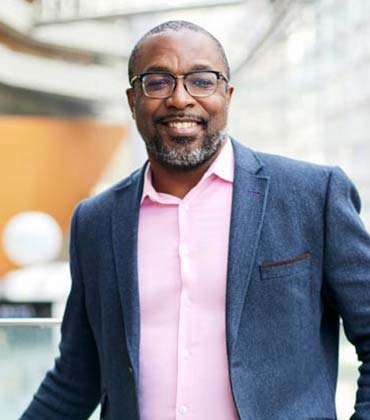
Henry Seals, Global Head of HR, OWNDAYS CO LTD
When people ask me how I align HR strategies with business goals across different cultures and markets, I think they sometimes expect me to explain how performance management in Japan is completely different from performance management somewhere else in Asia, and then perhaps provide a chart explaining all of the cultural differences. Unfortunately, my answer is much less exciting. For the most part, the tools of HR are the same. Talent development, performance management, talent acquisition, organizational design, compensation and data analytics are tools we use to solve business and people problems. If a company has a performance problem that requires better performance management, I am not going to avoid introducing performance management because of the country we happen to be operating in. The business problem determines what tool we need. Where culture becomes incredibly important is in determining how we introduce it, how we communicate it and, how we get people to trust it enough to actually use it.
Years ago, I was asked to introduce HR frameworks across several businesses in Asia. The assignment was wonderfully broad, which is another way of saying nobody was going to tell me exactly what to do. Senior leadership believed we needed stronger leaders who could better develop and retain talent, and it was essentially my responsibility to figure out how to get us there. That meant that before thinking about an HR program, I had to think about the outcome. If leadership capability was the problem, then ultimately, I should expect to see some improvement in how employees experienced their managers, how talent developed and, over time, whether good people wanted to stay with the company.
After spending time understanding the businesses, in Japan we decided that one of the first things we needed was a stronger performance management framework, followed by helping leaders become better at developing talent. Looking across the other markets, many of them needed essentially the same things. This made my life considerably easier because I was not trying to invent a completely different HR philosophy for every country.
What quickly became clear, however, was that we could not take the same road to get there. In one market, employees had a very positive relationship with senior leadership. Leaders were visible, respected and trusted, so having them explain why we were making the change gave the initiative credibility. Their involvement helped us. In another market, employee trust in senior leadership was much lower. Putting those same leaders at the front of the communication would not magically transfer credibility to the program. It could potentially do the opposite. So, there we spent much more time explaining the logic of the change directly to employees, what problem we were trying to solve, how the process would work and what was in it for them.
-
Start with the business problem. Choose the people strategy that can genuinely help solve it.
Therefore, I am somewhat cautious about broad statements regarding national cultures. I have spent most of my career in Japan and worked across many markets, and I certainly believe culture matters, but company culture can sometimes matter just as much. Before deciding how to implement something, I want to understand the organization I am standing in. Is it hierarchical? Do employees trust management? Is leadership respected? Are employees highly engaged? Is the organization healthy or are you walking into an environment where employees have heard promises about change many times before and have stopped believing them? Those answers tell me much more about how I should approach people than simply looking at the country on the address of the office.
Sometimes HR can become so concerned with either global consistency or local customization that we treat them as opposing choices. I do not think they are. The business should be consistent about the outcome it needs and the standards it expects. If we need stronger managers, better performance, deeper talent pipelines or improved retention, those needs do not disappear when we cross a border. What changes is how we bring people with us. In every market, we still have to explain the initiative honestly in the context of the employee experience. We have to answer the question employees are perfectly entitled to ask: how is this going to make my working life better, fairer or more successful? The answer may need to be communicated differently depending on who employees trust and how the organization works, but the underlying value should be real.
So, after years of working across cultures, my approach has actually become simpler rather than more complicated. Start with the business problem. Choose the people strategy that can genuinely help solve it. Understand the organization and the people who have to make it work. Then adapt the journey without compromising the destination. Culture should change the conversation, not lower the expectation.

